

Container houses have become one of the most innovative housing solutions of the modern era. Thanks to their modular structure, fast installation process, and cost efficiency, container houses are now used not only as temporary shelters but also as permanent living spaces, offices, and commercial buildings. However, the long-term durability and safety of a container house depend heavily on one critical factor: the ground it is built on.
The ground of a container house must provide stability, load-bearing capacity, and protection against moisture and movement. Although container houses are lighter than traditional reinforced concrete buildings, they still exert concentrated loads on specific points, particularly at the container’s corner posts.
An ideal ground surface should be level, compacted, and capable of distributing weight evenly. Uneven or weak ground can cause structural stress, door and window misalignment, and long-term deformation. Proper ground preparation ensures that the container house remains stable, functional, and comfortable for many years.
In addition to structural considerations, the ground type also affects drainage, insulation performance, and maintenance requirements. Choosing the correct foundation system based on soil characteristics is a fundamental step in container house construction.
Different ground types require different foundation solutions. While container houses are adaptable to various terrains, not every ground condition offers the same level of safety and longevity.
Concrete foundations are the most widely preferred option. A reinforced concrete slab provides excellent load distribution, moisture protection, and long-term durability. This type of foundation is especially suitable for permanent container house models and multi-unit structures.
Pier or footing foundations are commonly used on sloped or uneven land. In this system, concrete footings are placed under the container’s corner points. This method allows airflow beneath the structure and minimizes excavation, making it both practical and cost-effective.
Steel foundation systems and adjustable base platforms are increasingly popular for modular and relocatable container houses. These systems allow precise leveling and can be installed quickly without extensive ground work.
Gravel-based foundations are suitable for temporary or semi-permanent container houses. Proper compaction and drainage layers are crucial to prevent shifting and water accumulation.
Before selecting a foundation type, soil analysis is strongly recommended. Soil composition directly affects the bearing capacity of the ground and determines how it reacts to moisture, temperature changes, and load stress.
Clay soils tend to expand and contract with moisture changes, which can cause foundation movement. Sandy soils drain well but may lack sufficient load-bearing capacity if not properly compacted. Rocky soils offer excellent stability but may require additional preparation during installation.
Ground preparation typically includes leveling, compaction, and drainage planning. Proper drainage prevents water accumulation under the container house, reducing corrosion risks and protecting container house insulation systems.
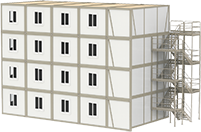
Different container house models have different foundation needs. Single-container houses may require simpler foundation solutions, while multi-container or multi-story designs demand more robust support systems.
Larger container house models often involve combined units, additional roof structures, and interior partitions. These elements increase overall weight and require foundations capable of handling distributed and point loads effectively.
Luxury container homes with terraces, balconies, or rooftop installations also place additional demands on the ground structure. In such cases, foundation planning should be done in coordination with architectural and engineering teams.
Container house insulation is not limited to walls and roofs. The interaction between the ground and the container floor plays a significant role in thermal performance and comfort.
A poorly insulated foundation allows cold or heat to transfer directly into the living space, increasing energy consumption and reducing indoor comfort. Insulated foundation layers help regulate interior temperatures and prevent condensation.
Raised foundations allow airflow beneath the container, reducing moisture buildup and protecting floor insulation materials. In colder climates, additional insulation layers may be required to prevent heat loss through the ground.
The comparison between tiny house vs container house often includes discussions about mobility, foundation systems, and legal requirements. While tiny houses are frequently built on trailers and designed for mobility, container houses are generally placed on fixed foundations.
This difference significantly impacts ground preparation. Container houses require stable, long-term foundation solutions, whereas tiny houses prioritize transportability. As a result, container houses often offer greater structural stability and design flexibility but require more detailed ground planning.
Understanding these differences helps buyers choose the right housing model based on lifestyle, location, and regulatory constraints.
Climate plays a crucial role in determining what the ground of a container house should be like. In cold climates, frost heave can cause ground movement, making frost-protected foundations essential. Deeper foundations or insulated footings help prevent freezing-related damage.
In hot and humid climates, moisture control and ventilation are critical. Elevated foundations and moisture barriers protect against corrosion and mold formation. In earthquake-prone regions, foundation systems must allow controlled flexibility while maintaining stability.
By adapting foundation design to local climate conditions, container houses can be used safely and comfortably in a wide range of environments.
Container house permit procedures vary by country and municipality, but foundation type is often a key factor in approval processes. Authorities typically evaluate whether the structure is temporary or permanent and whether it complies with zoning and building regulations.
Permanent container houses usually require building permits, approved foundation plans, and compliance with local construction standards. Temporary installations may have simplified procedures but still require adherence to safety and environmental regulations.
Understanding permit requirements early in the planning phase helps avoid legal complications and ensures smooth project execution.
Prefab container house prices are influenced not only by design and materials but also by foundation and ground preparation costs. While container houses are generally more affordable than traditional buildings, foundation expenses can vary significantly based on ground conditions.
Concrete foundations tend to increase upfront costs but offer long-term durability and lower maintenance. Simpler foundation systems may reduce initial expenses but could require more frequent adjustments or repairs.
When evaluating prefab container house prices, it is important to consider total project cost rather than focusing solely on the container unit itself.
A well-designed foundation directly affects the lifespan of a container house. Proper ground preparation minimizes structural stress, protects against moisture-related damage, and ensures consistent performance over time.
Without adequate foundation support, even the highest-quality container structures can experience premature wear, insulation failure, and maintenance issues. Investing in the right ground solution is essential for long-term satisfaction and safety.
A container house is a residential or commercial structure built using shipping containers as the main structural elements. It is constructed by modifying containers, adding insulation, utilities, and placing them on a prepared foundation.
With proper foundation, insulation, and maintenance, a container house can last 40–50 years or more.
Container houses can be used in cold, hot, humid, and seismic climates when designed with appropriate insulation and foundation systems.
Costs vary depending on container house models, foundation type, insulation level, and local labor and material prices. Foundation and ground preparation are significant cost components.
To provide you with better service, please email any questions or details regarding your theoretical and specialized architectural plans, projects, and product specifications to info@karmodkonteyner.com. We will respond to your request as soon as possible.


 EN
EN